
How to File a Claim After a House Fire
A house fire is one of the most devastating events a homeowner can face. In a matter of hours, a lifetime of memories and a sense of security can be reduced to ash and ruin. The emotional toll is immediate and profound. As the smoke clears, you are left in a state of shock, facing a future that is suddenly and frighteningly uncertain. The path to recovery begins in these first few moments, and the decisions you make will have a lasting impact on your family’s well being and your financial restoration.
The insurance claim process for a fire loss is not a simple transaction. It is arguably the most complex and arduous type of residential property claim. Unlike a straightforward hail damage claim, a fire claim involves multiple categories of loss, from the charred structure itself to the pervasive, hidden damage caused by smoke and water. It involves a meticulous, emotionally taxing inventory of every single item you owned. Navigating this alone, while processing your trauma, puts you at a severe disadvantage. Understanding the journey ahead is the first step toward taking control of it.
Your First Steps: Safety and Notification
Before you think about insurance, your only priority is safety. Do not re enter your home until the fire department has officially declared it safe. The fire may be out, but the structural integrity could be compromised, and the air will be filled with toxic particulates. Even after you are given clearance, you must wear protective gear, including sturdy boots, gloves, and an N95 respirator mask.
Your next call, after ensuring your family is safe and contacting loved ones, should be to your insurance company. This is called the “First Notice of Loss.” You must notify your carrier as soon as possible. This call officially starts your claim. Be prepared with your policy number, but keep your statements brief and factual. State your name, your address, and the fact that you have had a fire. You do not need to, and should not, speculate on the cause of the fire or the extent of the damage.
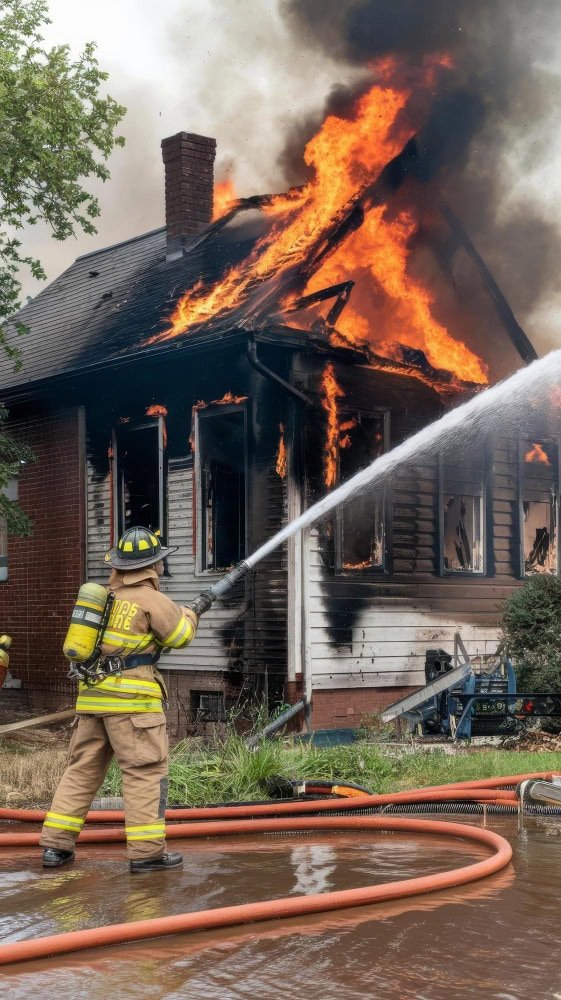
You are also now responsible for mitigating further damage. This is a critical duty under your policy. If your roof has holes or your windows are broken, you must have the property boarded up and tarped. This prevents rain, pests, or vandals from causing secondary damage. Failure to secure your property could give your insurer grounds to deny claims for any damage that occurs after the fire was extinguished. Keep receipts for any emergency board up services, as this is a covered expense.
The Hidden Damage: Smoke, Soot, and Water
The damage you can see from the fire is only the beginning. The true complexity of a fire claim lies in the secondary damage, which is often far more extensive and costly than the flames themselves. Firefighters use thousands of gallons of water to extinguish a blaze. This water saturates everything, soaking deep into drywall, subfloors, and structural wood. This creates an immediate and urgent problem: mold. In the warm, humid climate of Orlando, mold can begin to grow in as little as 24 to 48 hours, creating a new, toxic hazard. This water damage requires immediate professional water extraction and drying.
Even more pervasive is the damage from smoke and soot. Smoke is not just a smell; it is a physical substance. Microscopic particles of oily, acidic soot are forced by the fire’s heat into every conceivable space. This residue coats your walls, settles deep in your HVAC system, and infiltrates your attic insulation. It can etch metal, discolor plastics, and permanently ruin fabrics. The smell is not something that can be “aired out.” It is a physical contaminant that must be professionally remediated.
Do you or a loved one have fire damage? Click here to see our fire insurance adjuster services.
Insurance company adjusters may try to minimize this hidden damage. They may suggest that your HVAC system just needs a “cleaning” when, in reality, the corrosive soot has damaged delicate components, requiring a full replacement. They may argue for cleaning soot off a surface that has been permanently stained or etched. This is a major battleground in a fire claim. Without a deep understanding of toxicology and remediation, you are not equipped to argue for the full scope of work required to make your home safe again.
Recreating Your Life on Paper: The Home Inventory
Your insurance policy covers two main things: the structure of your home, known as “Coverage A,” and your personal belongings, known as “Coverage C.” To be paid for your belongings, you must submit a detailed home inventory. After a total loss, this is one of the most grueling and emotionally exhausting tasks you will ever face. You are being asked to remember, and put a price on, every single thing you owned, from socks and spoons to furniture and family photos.
The insurance company requires this in a specific format, often a spreadsheet. For every item, you must list a description, the quantity, its age, and what it would cost to replace it today. This process is the foundation for your formal “Proof of Loss,” a sworn, notarized statement of your claim that has a strict deadline. Simply guessing is not an option. The burden of proof is on you.

This is where the real work begins. You must go room by room, drawer by drawer, from memory. To jog your recollection, ask friends and family for any photos or videos ever taken in your home; a holiday party picture might show the artwork on your wall or the furniture in your living room. Check your email and online shopping accounts, like Amazon, for digital receipts and order histories. This inventory alone can take hundreds of hours and is a major source of dispute.
The Payout: Replacement Cost vs. Actual Cash Value
Once you submit your massive inventory, you must understand how you will be paid for it. Most homeowners have a Replacement Cost Value, or RCV, policy. This is a term that is deeply misunderstood. It does not mean your insurance company will write you a check for the full cost of everything you lost. Instead, they use a two check system.
First, the insurer calculates the Actual Cash Value, or ACV, of your belongings. ACV is the replacement cost minus depreciation. For example, they may decide your five year old sofa, which costs $2,000 to replace, had a “useful life” of ten years. They will depreciate it by 50% and determine its ACV is $1,000. They do this for every single item on your list.
Need a public adjuster? Click here to see why you should hire one.
The insurance company will then issue the first check. This check is for the total ACV of all your belongings, minus your single policy deductible. This first payment is often shockingly low and is not nearly enough to replace what you lost.
To get the rest of your money, you must claim your “recoverable depreciation.” This is the $1,000 for the sofa in our example. To claim it, you must first go out, purchase a new sofa, and then submit the receipt to the insurance company. Only then will they issue a second check for that $1,000 difference. You must repeat this process for every item you want to replace. This process is time sensitive; policies often give you a limited window, such as 180 days, to claim this recoverable depreciation.
Additional Living Expenses: Your Lifeline
While your home is uninhabitable, your policy provides a critical coverage called Additional Living Expenses, or ALE. This is also known as “Loss of Use.” This coverage is designed to allow your family to maintain its “normal standard of living” during the repair process. It is not a blank check; it is a reimbursement coverage for the increase in your expenses.
ALE covers the difference between your new, temporary costs and your old, normal bills. For example, it does not pay your mortgage; you are still responsible for that. However, it will pay for the hotel or rental home you must live in. If you normally spend $800 a month on groceries but are now in a hotel with no kitchen and must spend $2,000 on restaurant meals, ALE will reimburse you for the $1,200 difference.

This coverage is comprehensive. It can pay for pet boarding, furniture rental for your temporary home, storage unit fees, extra mileage for a longer commute, and even laundry services. The key is that you must pay for these expenses out of pocket first and then submit meticulous, itemized receipts for reimbursement. ALE coverage is not unlimited. It is capped at either a total dollar amount, often 10 to 30 percent of your dwelling coverage, or a time limit, such as 12 or 24 months.
Filing a house fire claim is a marathon, not a sprint. It is a complex, adversarial process that takes place when you are at your most vulnerable. You will be expected to become an expert in construction, toxicology, and accounting overnight. The insurance company has a team of professionals, including their own adjusters and engineers, all working to protect their financial interests. Their goal is to pay what is owed under their interpretation of the policy, which may not be what is required to make you whole. You need your own expert. A public adjuster works for you, not the insurance company. At US CARE Claims, we are your advocate. We manage this entire process, from documenting the hidden soot and water damage to meticulously pricing your inventory and negotiating for every dollar you are owed. We handle the claim so you can focus on what matters most: rebuilding your life.