Fire & Smoke Damage Claims: What’s Often Overlooked
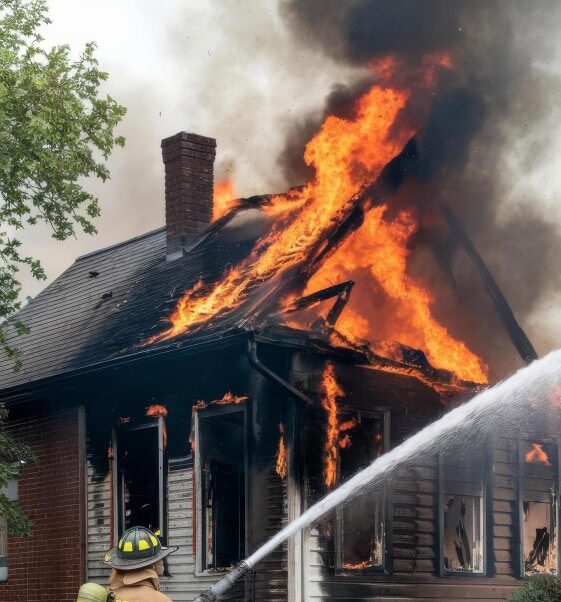
A house fire is arguably the most traumatic event a homeowner can endure. In a matter of minutes, the sanctuary you have built for your family is violated by heat, flames, and chaos. Once the fire trucks leave and the adrenaline fades, you are left standing in the wreckage of your life, grateful for your safety but overwhelmed by the destruction. Your first thought is to call your insurance company, trusting that they will handle the rest. You assume that the damage is obvious. You see the charred wood, the melted siding, and the ruined furniture. You expect the adjuster to walk in, see the same devastation, and write a check that covers the cost to rebuild. Unfortunately, fire claims are rarely that simple. The visible damage is often just the tip of the iceberg, and the most expensive aspects of the loss are frequently the ones you cannot immediately see.
Insurance adjusters are trained to assess what is visible. They measure the burned drywall and count the destroyed windows. However, they often overlook or minimize the complex, microscopic, and pervasive nature of smoke, soot, and water damage that lingers long after the flames are extinguished. This is not necessarily malicious; it is often a matter of speed and cost control. A quick settlement for visible damages gets the file off their desk, but it leaves you with a home that smells like a campfire, corroding electronics, and a potential mold nightmare. Understanding what is often overlooked in a fire claim is the only way to ensure you are truly made whole. At US CARE Claims, we peel back the layers of a fire loss to find the hidden costs that the insurance company ignores, ensuring your settlement covers the full scope of restoration, not just the cosmetic repairs.
The Corrosive and Pervasive Nature of Smoke and Soot
The fire itself may have been contained to the kitchen or the garage, but smoke knows no boundaries. It travels through the air, driven by the intense pressure and heat of the blaze. It moves through your HVAC ductwork, infiltrates the insulation in your attic, and seeps into the electrical outlets in the furthest bedrooms. What most homeowners do not realize is that smoke is not just a dirty cloud; it is a complex chemical compound. Depending on what burned—plastics, foams, synthetic fabrics, or wood—the resulting soot can be highly acidic and electrically conductive. This microscopic residue settles on everything in your home, often in places you would never think to look.
One of the most frequently overlooked items in a fire claim is the long-term damage to electronics and appliances. You might wipe the soot off your television or your refrigerator and think it is fine. However, the acidic nature of the soot can begin to corrode the delicate metal contacts on circuit boards inside the device. This corrosion does not happen overnight. It is a slow process that can lead to failure weeks or months after the claim is settled. Additionally, soot is conductive. If it settles inside your computer or your dryer, it can cause short circuits and overheating. Insurance adjusters will often deny coverage for these items if they still turn on during the initial inspection. We fight to have these items properly evaluated by electronics restoration specialists who understand that “turning on” does not mean “undamaged.”
The type of smoke also matters greatly. A slow-burning, oxygen-starved fire produces “wet smoke,” which is thick, sticky, and incredibly difficult to clean. A fast-burning, high-heat fire produces “dry smoke,” which is powdery but can be driven deep into porous materials. Then there is “protein smoke” from kitchen fires, which is virtually invisible but leaves a repugnant, rancid odor that discolors paints and varnishes. Adjusters often try to address all these types of smoke with a standard “cleaning” allowance. This is insufficient. Wet smoke often requires aggressive chemical cleaning that can ruin finishes, while protein smoke may require sealing and repainting the entire interior of the home. We ensure the scope of work matches the specific chemistry of the residue.
The Water Damage Aftermath
It is a cruel irony that the solution to the fire—thousands of gallons of water—often causes as much damage as the flames themselves. When firefighters attack a blaze, they are not concerned with your hardwood floors or your drywall; they are concerned with saving the structure and preventing the fire from spreading. As a result, a home that has suffered a fire has almost certainly suffered a massive water loss as well. This water does not just sit on the surface; it saturates the subfloor, wicks up into the drywall of unaffected rooms, and soaks into the insulation between floors.
Need a fire damage claim for your home? Click here for our fire damage adjuster.
The most critical overlooked issue here is mold. In the humid climate of Orlando, the combination of heat from the fire and moisture from the hoses creates the perfect incubator for microbial growth. Mold can begin to colonize within twenty-four to forty-eight hours. Insurance adjusters often try to separate the fire claim from the water damage, or they fail to account for the necessary mold remediation because “mold” is often limited in standard policies. However, when the mold is a direct result of the fire suppression efforts, it should be treated as part of the fire loss. We ensure that the drying process is immediate and comprehensive, and if mold does appear, we fight to have it covered as a direct consequence of the covered peril.
Furthermore, water can cause swelling and delamination in materials that were nowhere near the fire. Kitchen cabinets made of particle board can absorb moisture from the air or the floor and begin to crumble weeks later. Wooden framing can warp as it dries, leading to cracks in the drywall or doors that no longer close properly. An adjuster might look at a swollen cabinet in the next room and call it “wear and tear,” ignoring the fact that the humidity levels in the house spiked to 100% during the firefighting efforts. We connect these dots, proving that the water damage is inextricably linked to the fire event.
The Invisible Threat to Air Quality and HVAC Systems
Your heating, ventilation, and air conditioning system is the lungs of your home. During a fire, the system is often running, effectively pumping smoke, soot, and ash into every room in the house. Even if the system was off, the pressure from the fire can force smoke into the return vents. The interior of your ductwork is often lined with insulation or textured metal that traps these particulates. Once the soot is inside the system, every time you turn on the AC, you are re-contaminating the air in your home and breathing in potential carcinogens and irritants.
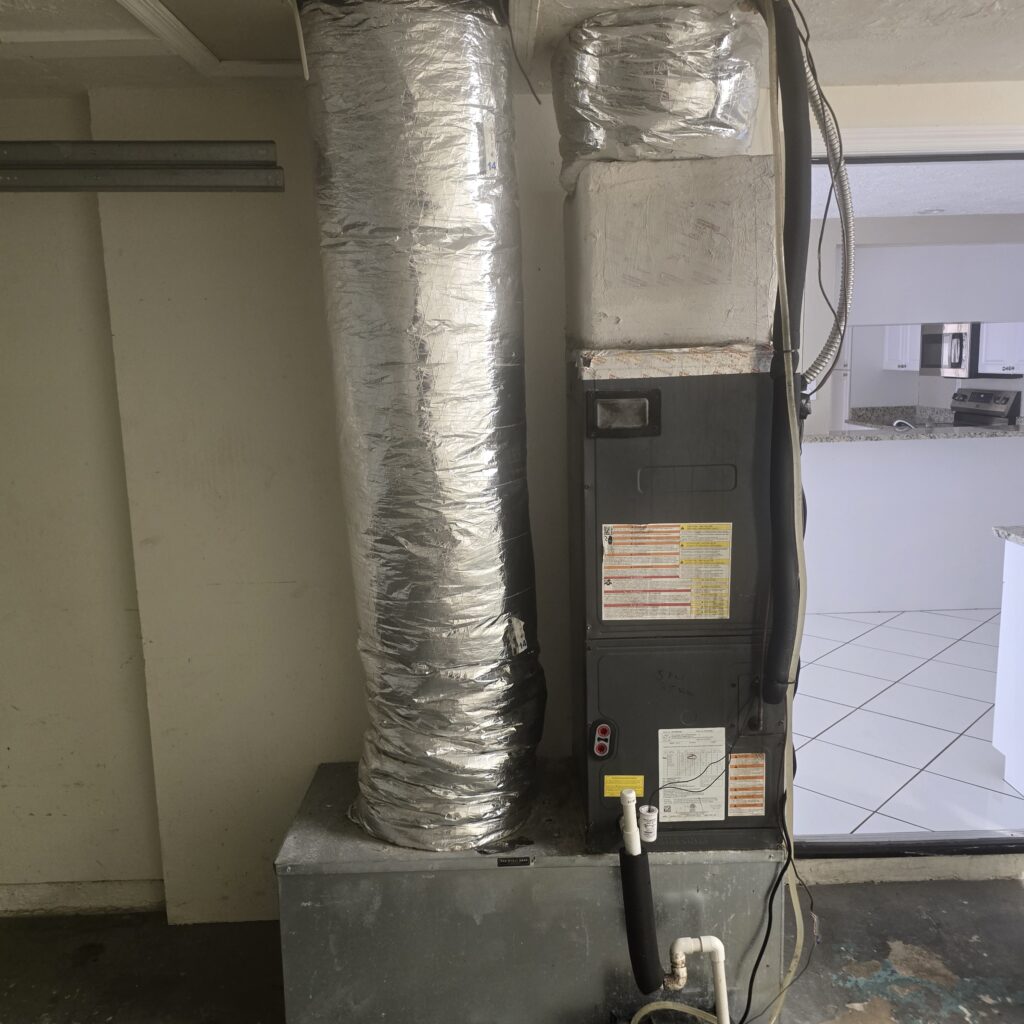
Insurance companies frequently try to settle this by paying for a standard duct cleaning. In many cases, this is wholly inadequate. If the ductwork is made of flex duct (the crinkly, plastic-wrapped tubes common in Florida attics), it is almost impossible to clean thoroughly without damaging it. The soot gets trapped in the ridges of the wire coil. If the insulation inside the air handler is compromised, it cannot be scrubbed; it must be replaced. We often argue for the full replacement of the HVAC system or the ductwork, especially in severe fires. The risk to your family’s health from breathing recirculated soot is too high to accept a simple vacuuming job.
Beyond the ducts, the insulation in your attic is a giant sponge for smoke odor. Even if the fire never reached the attic, the smoke likely did. Adjusters will often ignore the attic insulation if it is not charred. However, insulation that has absorbed smoke odor will off-gas that smell for years, especially on hot Orlando days when the attic temperature rises. You might scrub the walls and replace the carpet, but the smell will return because the source is sitting right above your head. We inspect the attic thoroughly and demand the removal and replacement of any insulation that has been compromised by odor, ensuring your home smells fresh, not like a permanent barbecue.
The Scope of Restoration vs. Cleaning
The biggest battleground in a fire claim is often the debate between cleaning and replacing. Insurance companies operate on a principle of indemnity, which means putting you back in the position you were in before the loss. They will always prefer the cheaper option, which is usually cleaning. They will propose cleaning smoke-stained carpet, washing soot-covered clothes, and sanding down charred studs. While cleaning is appropriate for some items, it is often a half-measure that leaves the homeowner with diminished value and lingering issues.
Are you underpaid by your insurance company? Click here for ways to fix that.
We see this frequently with textiles and soft goods. Porous materials like curtains, upholstery, and mattresses absorb smoke deep into their fibers. “Ozone treatment” or “dry cleaning” might remove the surface smell, but the particulates can remain embedded. If you have children or family members with asthma or allergies, “clean enough” is not safe enough. We advocate for the replacement of soft goods that have been heavily impacted by smoke. We challenge the effectiveness of their cleaning methods and demand that if an item cannot be restored to 100% of its pre-loss condition, it must be replaced.
Structural materials face the same scrutiny. If wood framing is charred, it loses structural integrity. Simply sandblasting the char off might improve the appearance, but it does not restore the load-bearing capacity of the wood. We bring in structural engineers to assess the damage to the frame of the house. We ensure that any wood that has been compromised by heat or fire is removed and replaced, not just covered up with a coat of sealant. We also look for “thermal shock” to windows. The intense heat can cause micro-fractures in the glass or break the seals on double-paned windows, leading to fogging later on. These are items that an adjuster walking through with a clipboard will almost always miss.
The Reality of Additional Living Expenses
When your home is damaged by fire, you often cannot live in it. The smoke fumes, the lack of electricity, and the construction make it uninhabitable. Your policy includes coverage for “Additional Living Expenses” (ALE) or “Loss of Use,” which pays for the extra cost of living elsewhere while your home is being repaired. This is one of the most underutilized and poorly managed parts of a fire claim. Homeowners often accept a small advance for a hotel and then struggle when the repairs drag on for months.

What is overlooked is the true extent of these expenses. It is not just about the hotel room rate. It is about the food. If you are living in a hotel without a kitchen, you are forced to eat out for every meal. This is significantly more expensive than cooking at home. ALE covers the difference between your normal grocery bill and your restaurant bills. It covers the cost of boarding your pets if the hotel is not pet-friendly. It covers the extra mileage you have to drive to get the kids to school from a temporary location. It covers the cost of laundry services if you do not have access to a washer and dryer.
Insurance companies will often try to cut off ALE payments once the “repairs” are done, even if the home is not yet livable due to lingering odors or pending inspections. They might try to force you into a temporary rental that is far smaller or less convenient than your home. We manage the ALE portion of the claim aggressively. We ensure that the carrier provides housing that is comparable to your standard of living. We track every receipt and every extra mile to ensure you are reimbursed for the disruption to your life. We fight to keep the ALE open until you can walk back into your home and resume your normal life, not just until the contractor puts down the last paintbrush.
A fire claim is a complex puzzle of chemistry, engineering, and contract law. It is not something that can be properly assessed in a one-hour walkthrough by an adjuster who is juggling fifty other files. The things that are overlooked—the corroding wires, the moldy subfloors, the smoke-filled ducts, and the true cost of displacement—are the things that will haunt you if they are not addressed. You only get one chance to settle your claim correctly. Once you sign the release, you cannot go back and ask for more money because your TV stopped working or your attic smells like smoke. At US CARE Claims, we know where to look. We know what questions to ask. We know how to prove the invisible damage. Do not leave your recovery to chance. Let us handle the details so you can focus on healing and rebuilding.