
Wind Damage to Your Roof? Here’s What to Check
The wind in Orlando is a powerful force. It does not take a named hurricane to compromise the integrity of your home. A severe afternoon thunderstorm can generate gusts strong enough to lift shingles, break seals, and expose your property to water intrusion. When the storm passes, most homeowners walk out to their driveway, look up, and if they do not see a gaping hole, they assume everything is fine. This assumption is dangerous. Wind damage is often subtle, lurking just beneath the surface of your roofing system. It is a silent problem that, if left unchecked, will rot your decking, destroy your insulation, and lead to a denied insurance claim months down the road.
Knowing what to look for is the first step in protecting your investment. You do not need to be a roofing contractor to spot the red flags, but you do need to know where to look and what the evidence looks like. The difference between a minor repair and a total roof replacement often comes down to identifying these signs early and documenting them correctly. As a public adjusting firm that deals with Florida carriers daily, we see how often valid wind claims are denied because the damage was not “obvious” enough to the untrained eye.
Safety First: Stay off the Roof
Before we discuss what to look for, we must establish how to look for it. Your roof is dangerous, especially after a storm. The surface may be slippery, debris may be unstable, and structural damage could make decking weak. Do not climb a ladder and walk your roof unless you are experienced and have the proper safety gear.

Most of the initial inspection can be done from the ground with a good pair of binoculars or by using a camera with a high quality zoom lens. If you have a drone, this is the perfect time to use it. A drone can capture high resolution images of every slope and angle without you ever leaving the ground. If you see something concerning from the ground, do not try to investigate it yourself by climbing up. That is when you call a professional. Your safety is more valuable than your deductible.
The Visible Evidence: Missing Shingles and Granule Loss
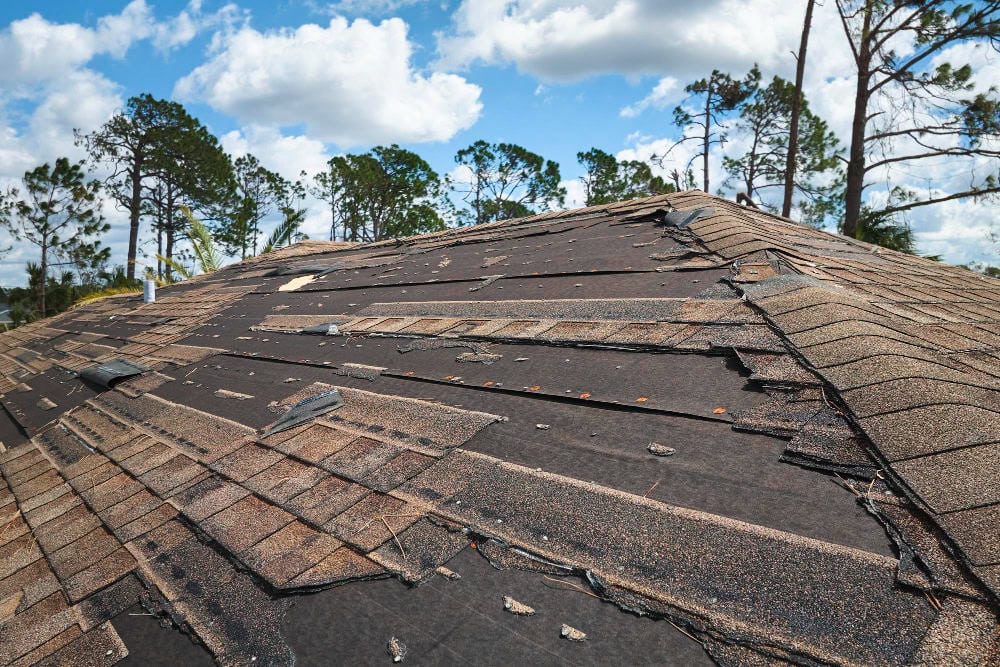
The most apparent sign of wind damage is missing shingles. If you see dark patches on your roof where shingles used to be, or if you find shingles lying in your yard, you have an immediate problem. This exposes the underlayment or the wood decking to the elements. However, do not stop there. Look closely at the shingles that are still attached. Are they lying flat, or do they look uneven?
Need to file a roof damage claim? Click here for our roof damage public adjuster.
Check your gutters and downspouts. Asphalt shingles are covered in ceramic granules that protect the asphalt from the sun’s UV rays. When shingles flap in the wind or are struck by debris, these granules are knocked loose. If your downspouts are piling up with black, sandy residue, your roof has suffered significant trauma. This granule loss accelerates the aging of your roof and is a valid component of a storm damage claim.
The Hidden Killer: Lifted and Creased Shingles
This is where the insurance battle is often fought. Wind damage is not always about what is missing; it is about what has failed. A “lifted” shingle is one that has been pulled up by the suction of the wind but has laid back down. The adhesive seal that bonds that shingle to the one below it has been broken. Once this seal is broken, that shingle will flap in every subsequent breeze, allowing water to act like a pump, pushing moisture into the nail holes and under the underlayment.
Insurance adjusters often try to argue that these shingles are simply “unsealed” due to age or heat expansion, rather than wind damaged. This is a critical distinction. A public adjuster knows how to differentiate between a failed seal from age and a seal that has been ripped apart by wind uplift.
Look for creases. When a shingle lifts and flaps, it bends backward. This creates a horizontal crease or crack across the top third of the shingle, usually right where the nail line is. From the ground, this might look like a faint dark line. Up close, it is a fracture in the asphalt mat. A creased shingle is a failed shingle. It cannot be repaired; it must be replaced. If you see these dark lines, you have wind damage.
The “Brittle Test” Trap
If an insurance adjuster comes to inspect your roof, you need to be aware of a tactic called the “brittle test” or “repairability test.” The adjuster might lift a shingle to 45 or 90 degrees to see if it cracks or breaks. They claim they are testing to see if the roof can be repaired. If the shingle breaks, they might say the roof is “too brittle” due to age and therefore the damage is “wear and tear,” which is excluded.
Conversely, they might use this test to deny a replacement. If they lift the shingle and it doesn’t break, they will say, “See, we can repair these few wind damaged shingles, so we don’t need to pay for a new roof.” This is a trap. The repairability of a roof involves much more than just bending a shingle. It involves the condition of the decking, the type of fasteners used, and Florida building codes. Do not let an adjuster’s quick “bend test” determine the fate of your claim without a second opinion.
Understanding Florida’s 25% Rule
For years, Florida had a straightforward rule: if more than 25% of your roof was damaged, the insurance company had to replace the entire roof. This was a massive protection for homeowners. However, recent legislative changes (Senate Bill 4-D) have modified this rule, and it is essential you understand the new landscape.
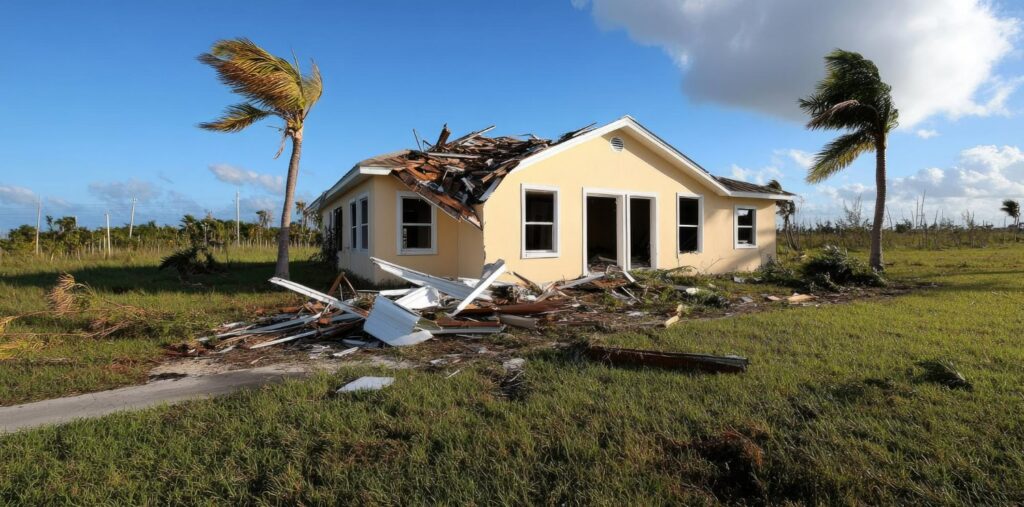
The new rule depends on the age of your roof. If your home’s roof was built, repaired, or replaced in compliance with the 2007 Florida Building Code (which effectively means roofs built after March 1, 2009), the 25% rule no longer applies in the same way. If you have a newer roof, the insurance company is technically allowed to repair only the damaged sections, even if that damage exceeds 25% of the roof area, as long as the repairs meet current code.
However, if your roof was built before March 1, 2009, the old rule still stands. If more than 25% of that older roof is damaged, the entire system must be brought up to current code, which means a full replacement. Knowing the exact permit date of your roof is now one of the most important facts in your insurance claim.
Don’t Forget Flashing and Vents
Wind does not just affect shingles. It attacks the transition points of your roof. Look at the metal flashing around your chimney, skylights, and plumbing vents. Strong winds can pry this metal loose, creating large gaps for water entry. Check your ridge vents (the vent running along the very peak of your roof). These can be cracked or ripped entirely off.
Want to prepare for next year’s hurricane season? Click here for more information.
Also, look for debris impact marks on these metal fixtures. Dents in your soft metal vents are “collateral evidence.” Even if the shingle damage is subtle, a dented box vent proves that damaging forces hit your roof. This helps build the narrative of the storm’s severity, which supports your claim for the shingle damage.
Your roof is the first line of defense for everything you own. Determining if it has been compromised by wind is not always a black and white process. The insurance company has trained adjusters looking for reasons to say “no” or to minimize the scope of repairs to a simple patch job. You deserve a professional who is looking for the truth. At US CARE Claims, we understand the physics of wind uplift, the nuances of Florida building codes, and the tactics used to underpay claims. If you suspect wind damage, do not wait for a leak to appear. Call us for a professional review of your loss.